The BELONGING project is a journey I’m taking with the community of Nevada County. Every week I ask a question on Facebook that explores how we find a sense of belonging. Here is the question I asked most recently.
How do the friendships you had growing up shape your sense of belonging now?
Growing up I felt an incredible pain from feeling like I didn’t belong in my own home while I dreamed of belonging where I wasn’t wanted, with my dad. My dad and I shared the same looks and big personality, I felt comfortable with him because we were alike. As a child my friendships often reflected these same family dynamics, feeling like an outcast in friendships that I perceived I didn’t belong in because I wasn’t enough. Further making me feel incredibly insecure about if I would ever belonging with anyone, anywhere. I think that is why I cried so much on my wedding day, someone wanted me to “belong” with them. To this day I rarely feel like I fit in with most people so I cherish the relationships where I do feel a sense of belonging. After many years of rejection from the art world, I have come to realize that none of it is personal and that I belong to myself first and foremost.
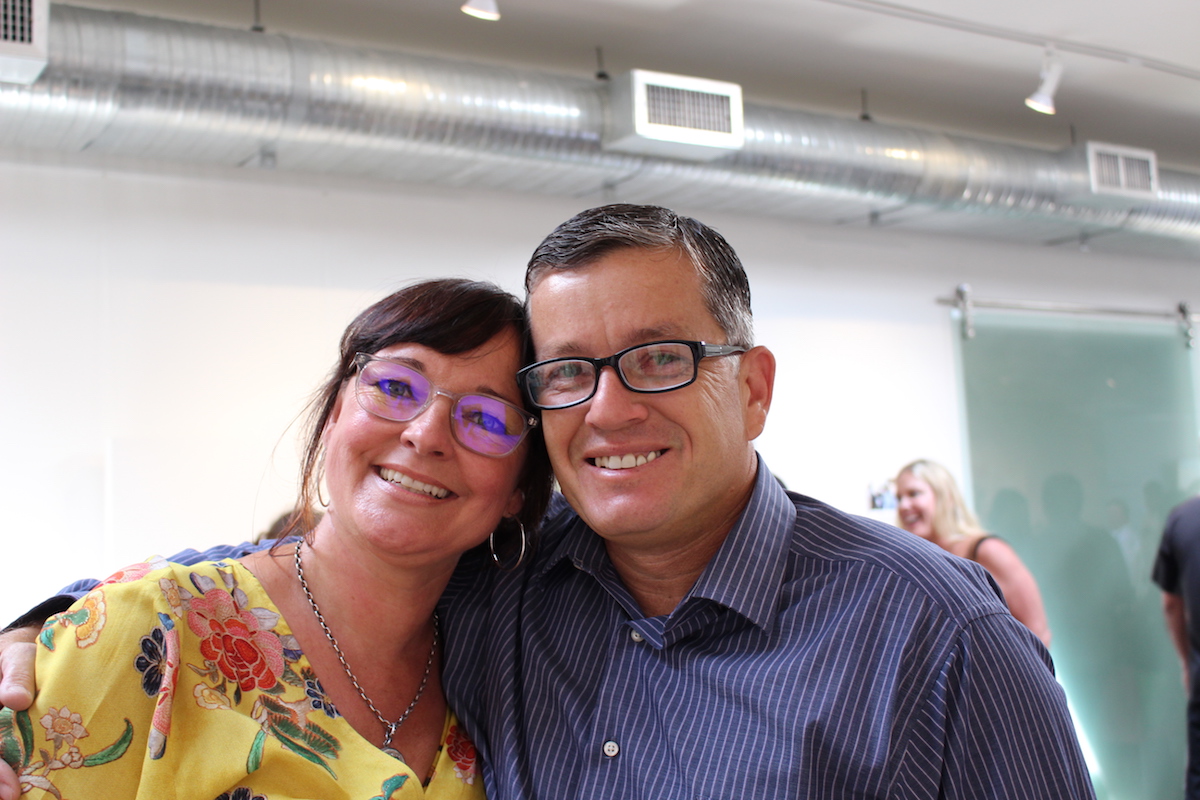
Ruth Chase and Marla in Venice, CA
So, how do the friendships you had growing up shape your sense of belonging now?
A pop-up installation where Ruth asks people if they want a hug and if she can take an instant photo of passers-byes, then encouraging them to hang the photo where it could be seen as a reminder of their importance and value to their community. The backdrop is a pop up photo booth intended to be a personal encounter with another human, changing the roll of the selfie from an isolated “look at me” photo to a visceral experience that involved contact and purpose.
In 2015 Ruth Chase created sketches for “No Vacancy”, filmed at The Holbrooke Hotel in Grass Valley, CA. for a TV reality program called The Dead Files on The Travel Channel.
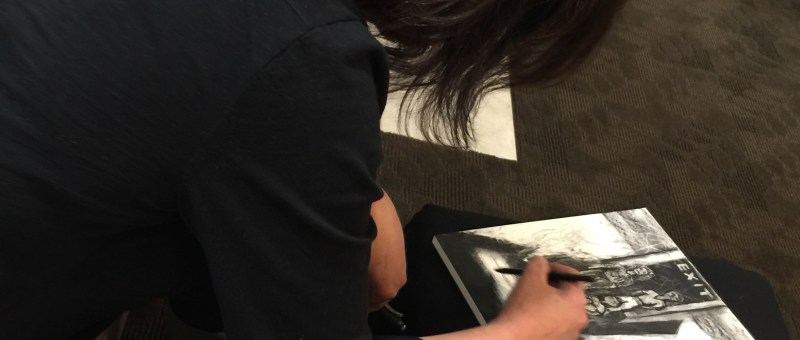
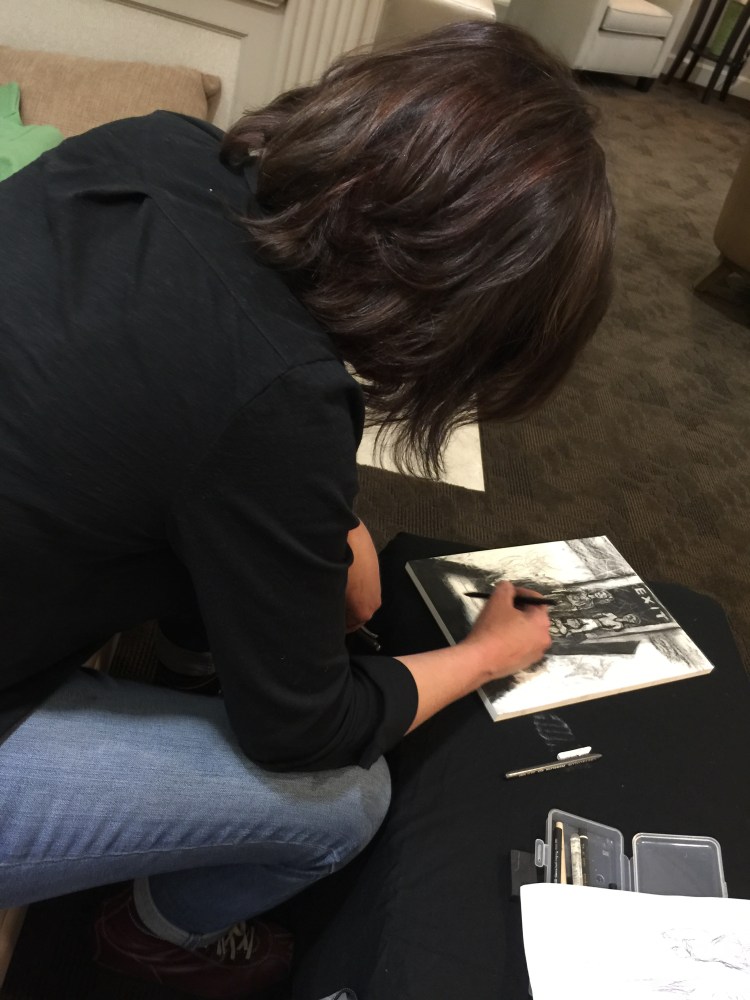
MEETING AMY ALLEN Amy was a freaking trip, in all the best ways. An incredibly interesting, strange, distant, and focused person—she was the real deal. Sitting with her felt like being with someone who was hallucinating. My guess is that she was reading spirits and energy the whole time. As we sat in a hotel room to film the scene, sitting across the table from each other, it felt like she was reading me, or the room around me. Her eyes darted back and forth, over and around me, but never looked directly at me, even when I spoke to her. I loved every minute of it. After our scene together, I sat down to draw what she had described, both on camera and off, texting her photos of the progress to ensure the image matched what she saw. The hardest part of drawing a quality piece was dealing with all the distractions that pulled me away from being in my own space of channeling. Though, I wouldn’t have wanted to mix in with the energy there, so I guess it worked out for the best.
NO VACANCY
Retired NYPD homicide detective Steve DiSchiavi and physical medium Amy Allan investigate paranormal activity at a small-town hotel in Grass Valley, California. Their separate investigations take harrowing turns as Steve uncovers the hotel’s history of destructive fires and scandalous violence, while Amy comes face-to-face with the deranged dead during her overwhelming walk.
The Travel Channel
A brief clip from No VacancyRuth and her daughter on set for Dead Filesby Artist Ruth Chase
Shelly Covert was born and raised in Grass Valley. Her family goes back long, long time – countless generations before the Gold Rush. They are from the original people who were here, the Nisenan Indians. Shelly is the Spokesperson and Tribal Council Secretary – Nevada City Rancheria Nisenan Tribe and Executive Director of the 501c3 non-profit organization, C.H.I.R.P or the California Heritage: Indigenous Research Project.
A sample of the interview of Shelly Covert with Ruth Chase, recorded by Radu Sava.
After meeting Shelly I decided to create the BELONGING project; about how people find a sense of belonging through the land. Their answers sit in a strange dichotomy as Tribal members feel a varying “personal” sense of belonging having lived here in their ancient tribal homelands never having been removed. Individuals have family, friends and community connections that help them to BELONG. But, when asked if the Tribe as a whole feels a sense of belonging, the answer was quite different; and how could it be any-other-way after their people were nearly annihilated during the Gold Rush. The Tribe itself is invisible. The Tribe is “terminated”. The Tribe has no local value that can be seen by the community. This is in contrast to many of their personal feelings of home, community, and belonging. The Nisenan are a vital link to our own sense of belonging to the land, as the roots of our community tree; the relationship they have held with the land can teach us how to connect with it ourselves.
Shelly is a featured participant of BELONGING, a community arts initiative led by Nevada County Arts Council, Artist-in-Residence Ruth Chase, generously funded in part by California Arts Council through its Artists Activating Communities Program.
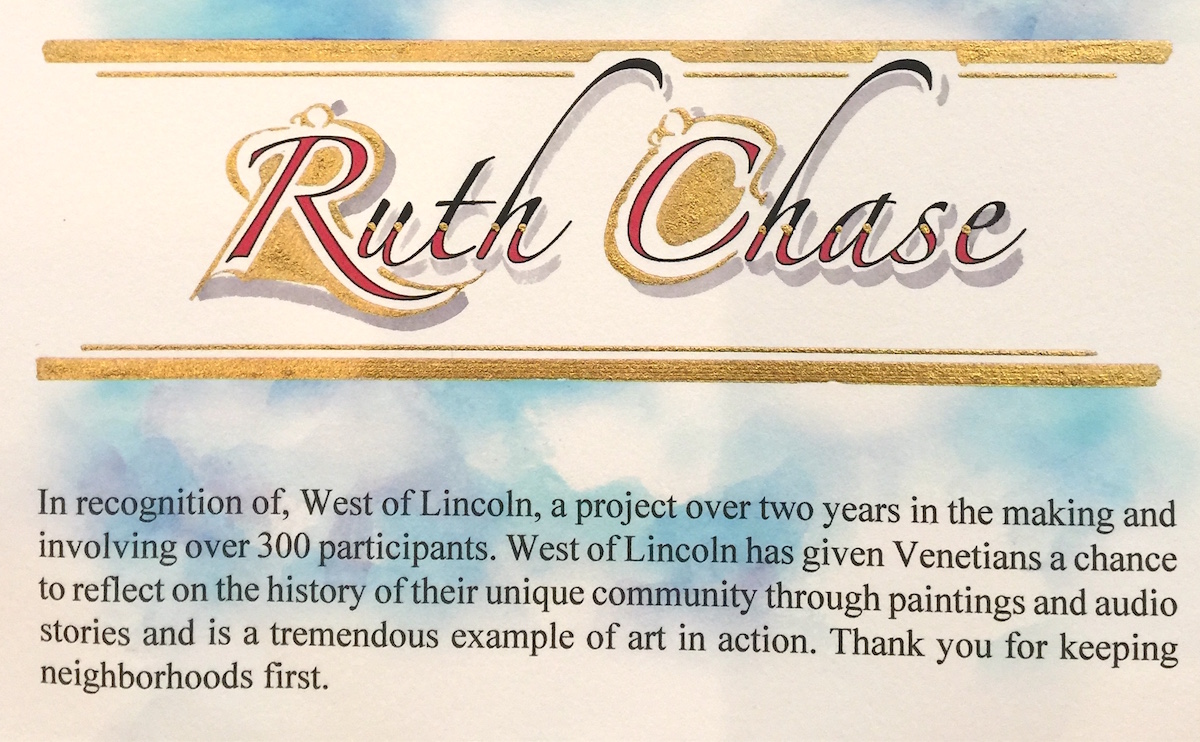
I opened the mail today and found this certificate of appreciation for the West of Lincoln Project. Not sure what it means other than it felt great to have it in writing from an unexpected source.
An Artist Remembers Venice in the ’70s, When Growing Up Was an Act of Survival
TUESDAY, AUGUST 22, 2017 AT 6:32 A.M.
BY JENNIFER SWANN
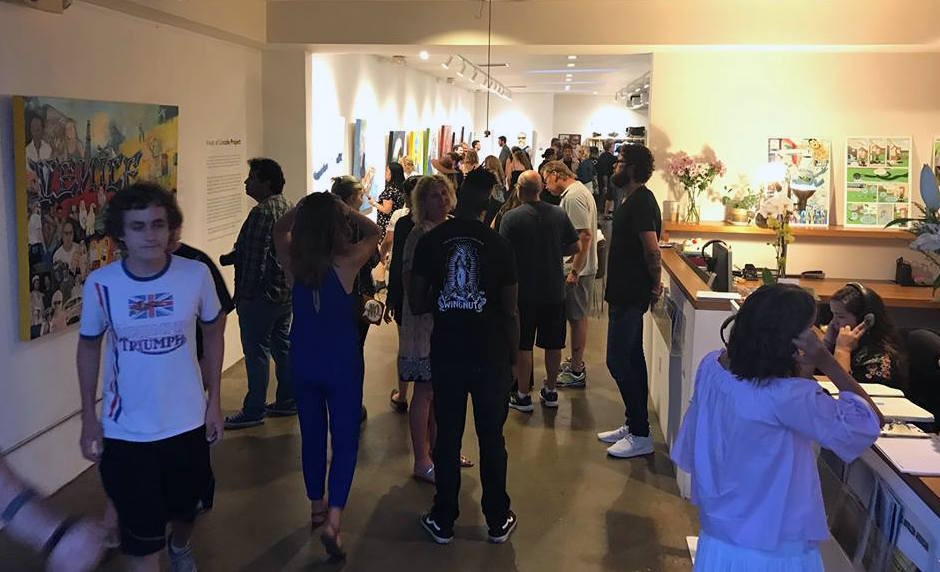
West of Lincoln Project opening
Eddie Hadvina points to the painting of himself as an 11-year-old Boy Scout. In it, he’s wearing an olive green cap and a red kerchief with his khaki uniform, a skateboard in one hand and a trophy in the other. On his left shoulder is a patch representing Venice’s Troop 34, which he joined at his mother’s insistence.
“That’s where all the trouble started,” says Hadvina, now 56 and sporting a gray goatee. “That’s where I met all my Venice Hoodlum friends,” he says, referring to a street gang that was active in the neighborhood in the 1970s.
Hadvina’s parents, both Hungarian immigrants, visited Venice on their honeymoon in 1960 — Hadvina says he was conceived during that trip — and decided to move there two years later. Hadvina discovered skateboarding when the sport was still brand-new and being pioneered in the neighborhood by people like Stacy Peralta, one of his peers. But Hadvina’s substance abuse problems weakened his chances of becoming a professional skateboarder.
“When I was a teenager I was really good at skateboarding and surfing,” he says. “But every time I showed up to skateboard, I’d never make it in [to the skate park] because they’d all be partying and I love partying.”
Hadvina, who on a recent Saturday wore a baseball cap and a T-shirt printed with images of the Venice Skate Park, is one of the subjects featured in artist Ruth Chase’s exhibition “West of Lincoln.” The show of a dozen paintings and accompanying audio portraits, which opened earlier this month and runs through Sept. 10 at the nonprofit Venice Arts gallery, seeks to tell the stories of people who grew up west of Lincoln Boulevard in the 1970s, when the neighborhood was better known for poverty, gang violence and a burgeoning youth skating culture than for billion-dollar tech companies, designer boutiques and trendy restaurants.
Like Hadvina, many others featured in Chase’s project experienced violence and addiction to drugs and alcohol from a young age. Some spent years trying to recover from habits they picked up on the streets of Venice. Nearly all recall a tough, eclectic neighborhood that felt nothing like the wealthy, sterilized enclave it is today.
“Most people either dealt with drive-by shootings — I got jumped — or knew somebody that died because of a gunshot or a knife, a stabbing,” says Chase, who grew up in the neighborhood in the ’70s and describes the culture as one of survival. “We always used to say, you go east of Lincoln to see green lawns and two parents.”
“You had to have a little bit of an edge or you’d get picked on,” says David Fowler, one of the people Chase featured in the show. “You had to hold your own, and people had to know that you were tough enough not to mess with.”
At the same time, Venice Beach was attracting free-spirited 20- and 30-somethings who moved there from across the country to live the so-called hippie lifestyle and find work on the boardwalk, with its tourist-friendly arcade games and cafes. “They experience Venice entirely different than a local does,” Chase says. “It was a weird contrast.”
Ruth Chase with David Fowler
Skateboarders David Fowler, right, and Ruth Chase
The first time Chase noticed Abbot Kinney becoming a destination was when Hal’s Bar and Grillopened on the block — then known simply as Washington Boulevard — when she was still a teenager. “We were on welfare. My mom, she didn’t read or write, she didn’t drive a car, and Hal’s moved in and it was like, ‘Wow, this is a cool fancy new place,’” Chase says. “I remember taking my mom there and realizing she couldn’t afford to eat there.”
Rhonda Lynn Wise, one of the subjects featured in the show, says it’s no wonder the area gentrified so quickly: It’s home to beachfront property. And yet, for years, she says, “West of Lincoln was a ghost town. That’s where the Latinos and the blacks and the surfers lived.”
Venice began to shed its ghost-town reputation in the 1990s, when developers swooped in aggressively. “Venice was the type of town where you passed your property down to your family,” Wise says. “When these developers came in, they put very large price tags on these homes. When someone offers you a million dollars for your home, you’re probably going to sell it.”
Gena Lasko | Rhonda Lynn Wise
Rhonda Lynn Wise stands next to the painting inspired by her life.
Wise says her family never owned property, and she still marvels at the fact that her single mother was able to raise three kids in a three-bedroom apartment near the beach for about $300 a month. “It’s unheard of now,” she says.
Chase, who now lives in Northern California, came up with the idea for the “West of Lincoln” project during a visit to Abbot Kinney in 2014 — just a year before Hal’s was priced out of the block and was forced to relocate to Playa Vista. Chase found herself standing in the middle of the street, disoriented by what she was seeing: high-end shops and restaurants in every direction. When she returned home, she wanted to find other people who could relate to the quaint, scary, weird Venice of her childhood. She thought maybe they all shared similar experiences growing up, and she wondered how those experiences might have affected them as adults. She posted ads on Facebook and Craigslist seeking people willing to be interviewed and then painted. Getting them to trust her wasn’t easy.
“What I’d hear was, ‘Well, who the fuck are you?’” Chase says, imitating her critics. “‘What do you want? You’re just part of that motherfucking gentrification and you’re just gonna tell our stories and make money off it.’”
But word-of-mouth spread and Chase eventually found a group that agreed to participate, but only after she proved that she was one of them: a Venice native with no monetary incentive. It helped that she also guaranteed her subjects full creative input over the final result. Chase conducted interviews and then hired a writer, Gena Lasko — thanks to a grant from the Carl Jacobs Foundation — to condense them into short biographies.
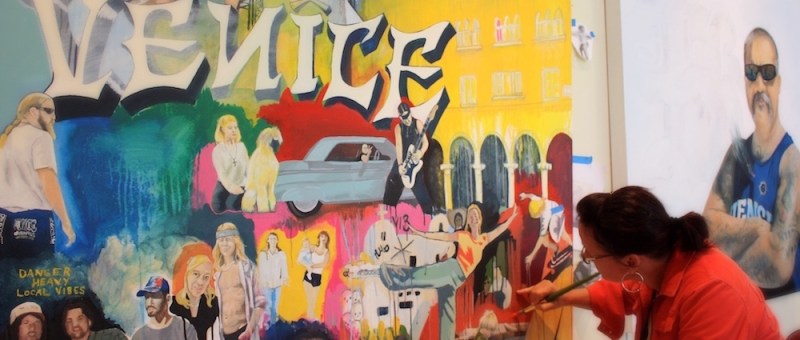
Chase’s paintings are not intended as acts of realism but representations of each person’s upbringing and most transformational experiences. Hadvina, for example, is portrayed as a Boy Scout, but behind him is an adult silhouette referencing his present. The silhouette is painted to look like water, a nod to the empty swimming pools he got in trouble for skating in as a kid.
Chase’s painting of Fowler, a skateboarder who also struggled with drugs and alcohol, depicts him flying through the air on his board. On the bottom of his deck are the faces of his wife, children and parents. The visual is a metaphor for his support of his family through various health crises, including both his wife’s and his mother’s ovarian cancer diagnoses several years ago. Now a real estate agent in Venice, Fowler says he’s lucky to raise his kids in the same neighborhood where he and his wife both grew up, especially now that he can teach them not to repeat the same mistakes he made.
“Our kids go to the same elementary school we went to 40 years ago. It’s so amazing,” he says, “to be an example to them so they don’t have to suffer the way we did.”
After all these years, Hadvina and Fowler haven’t given up on their skater roots. They both ride for Santa Monica Airlines Skateboards and Hadvina still competes in competitions aimed at older skaters. Sober for more than two decades, it’s as if they’re getting to redo the childhoods they never had.
“We’re still doing airs out of pools,” Hadvina says. “We’re skating like kids.”
The closing reception for “West of Lincoln” is Sun., Sept. 10, 10 a.m.-noon, at Venice Arts, 13445 Beach Ave., Marina del Rey; (310) 392-0846, venicearts.org.
For two years, Yo! Venice has followed Venice-raised artist Ruth Chase as she worked on a series of large scale paintings, recorded audio interviews, and collected the stories of those who have, and do call Venice home.
The West of Lincoln Project traces the history of Venice through the people who grew up in the neighborhood. This Saturday, August 5th, at Venice Arts, the Project opens. On the eve of her exhibition, Chase shares how she feels about the changes to the community and why she will always be a Venice woman.
How do you feel?
Other than excitement, I have a little fear, some anxiety mixed in with a deep sense of love and pride from Venice. It’s been a journey that I have not taken alone, up to 300 people have participated in this project along the way. I suppose that is what has kept me going. This project has held a lot of emotion that has collected along the way. I’m not so stressed about the opening, I know the opening will be off the hook, my anxiety is more about showing up as a whole person when I have played small most of my life. Some will dig the paintings, but I think what makes this event powerful is that it is real and from the heart, mixed in with memories about the Venice that most people will relate to or go away with a greater understanding for a city that has all eyes on it.
The stories of those who have, and do call Venice home. Courtesy: Ruth Chase.
What was it like hearing the Venice stories of so many people who grew up here?
It’s been life changing. I’m sure I have listened to well over a 100 Venice stories over the past two years. The other day I was editing the audio that goes with the West of Lincoln painting, and I couldn’t stop crying because everyone had this special bond with Venice, past, and present. It made me realize what a sense of belonging really is and that it doesn’t go away. I heard once that you can’t know who you are until you know who you’ve been. Listening to the stories made me realize just how tough Venice was, not just for me, but for most people. People that grew up here tend to be authentic, outspoken, protective, passionate, and what you see is what you get kinda people.
Can you share an example of a particularly moving story you discovered?
Ohh that’s a tough one, they all moved me in one way, or another or I wouldn’t have been able to paint them. I think one that stands out for me is Gloria Olivas Omar because her insight was so unique. She titled her painting “Place of Strength” for a very moving reason. When I interviewed her, I knew she was completing treatment for stage four breast cancer. My first question was how Gloria was dealing with all of it. Her answer was that she held a vision of herself as a little girl. That her less than perfect childhood actually empowered her, that those years would serve her as an adult and fuel her inner strength. My take on it was that when children are hurt, they know only to look for love, that is their instinct, even in the worst of circumstances. As we worked on the painting over the three months, she impressed on me that it takes courage to love. If you have that, you win!
“Going through cancer was nothing compared to what I went through as a kid, but it has required the courage of that little girl from the beach. I never thought that the challenges in my childhood would be my source of strength, but it is. There is strength in innocence” – Gloria Olivas Omar
One other to choose from would be Ananda Jaynes photo submission for “West of Lincoln” painting. It’s an image of her holding her little brother Joe, walking down the boardwalk with their mom who would pass away from cervical cancer. Joe and Ananda wouldn’t see each other for over 30 years shortly after the picture was taken until Joe’s wife saw the image of the painting online and was able to contact Ananda. Now they are all meeting at the Opening for the first time in 30 years. That was awesome for me to be a small part of that.
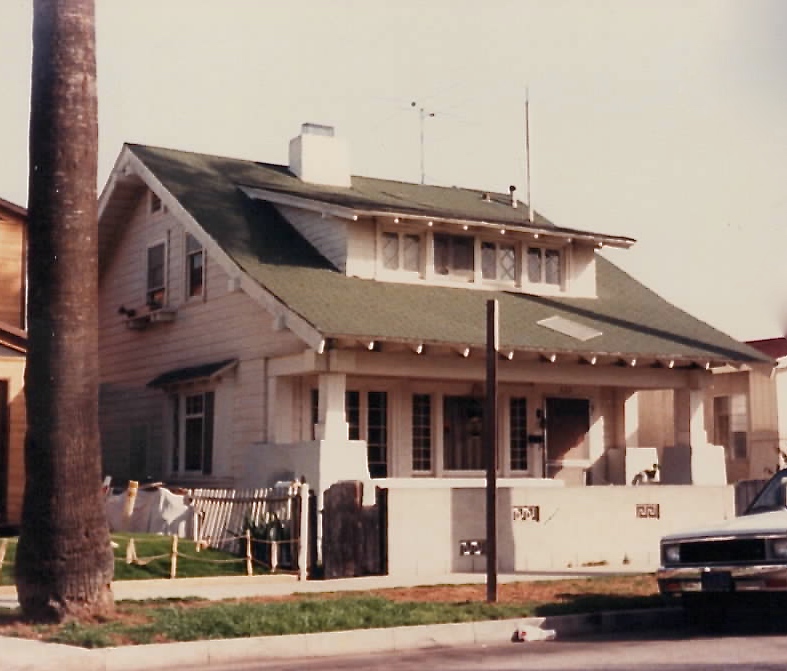
Chase’s childhood home at 523 Rialto Ave in Venice. Courtesy: Ruth Chase.
You grew up in Venice. What were your thoughts on Venice before and then after working on the Project?
BEFORE: Growing up here I knew nothing else. The only thing that was clear in my head was that we were poor and that outside world looked down on where I lived and how we lived. It was us and them.
In 2014: I walked around Abbott Kinney Blvd., I felt sick to my stomach and confused. If I were visiting someone else’s home town, I would love all the fancy shops, the good hipster food, but not when it was in my Venice. It felt like I had landed in another time and I couldn’t identify anything I knew about “home” or as a place that I had ever been before. I felt very displaced. Where the fuck was I?
AFTER THE PROJECT: I can see now that I used this project to work out the multi layered relationship I had with Venice then and now. Now I see Venice as an energy; it’s alive, it’s ever changing, and it has people who live there that really, really care about it. My hope is that others will understand Venice better through these stories. That as Venice moves forward there could be an understanding of the energy that Venice has, and has always had, and to respect it and work with it, on both sides of the dollar.
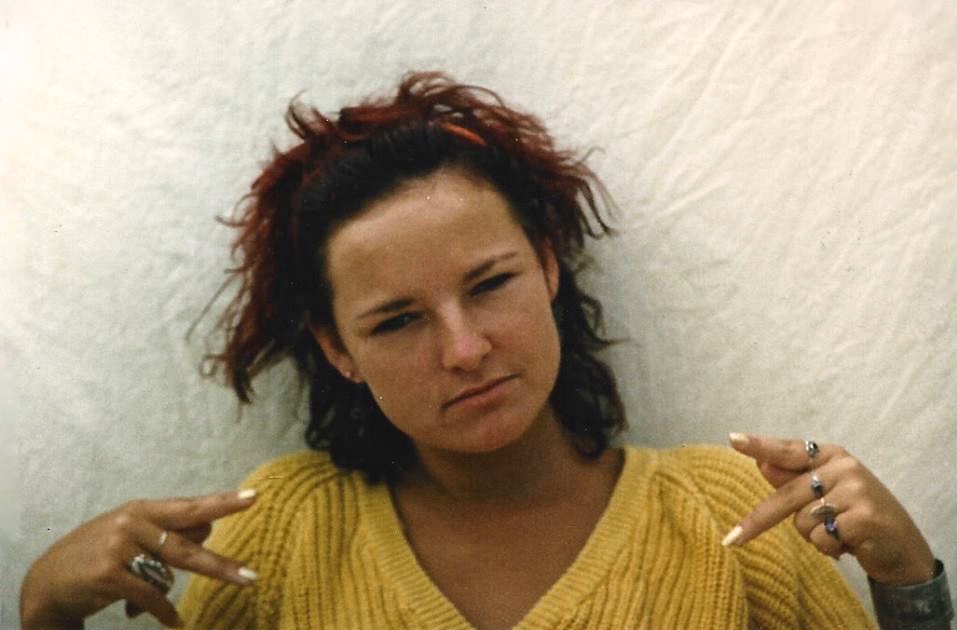
Chase in the 80’s on the roof of her home on Rialto Ave. Courtesy: Ruth Chase.
Has the Project changed the way you think about Venice? If yes, how?
YES, BIG TIME. Now I understand why there is so much local pride and protectiveness about the outside world moving in. No different than any other small town, except Venice people have an edge. People think of Venice as LA but really it’s been a small town for a long time, many of it’s older residents staying primarily within its borders. Since this project, I can FEEL Venice, not just as a place or concept in my head, but as a living breathing place with energy that has a current running through it. I will never see Venice the way I did before because I know that the culture here is built on a vibe that shouldn’t be taken for granted.
Venice by Ric Clayton.
What was the biggest thing you discovered working on the West of Lincoln Project?
Two things, one is that streets smarts have value and while street life is often romanticized by the mainstream. These life lessons are valuable to our culture, and for anyone who LOVES Venice, they could learn why and how Venice got to be the way that it is. If people want to keep Venice alive and real, they may want to understand the people who have lived here for awhile.
And secondly, I took much of my childhood that wasn’t great and was able to find value in the pain and suffering, which will forever change me moving forward. I no longer look back on my life and see it with judgment or ignore the dark days, but rather use my past to empower me.
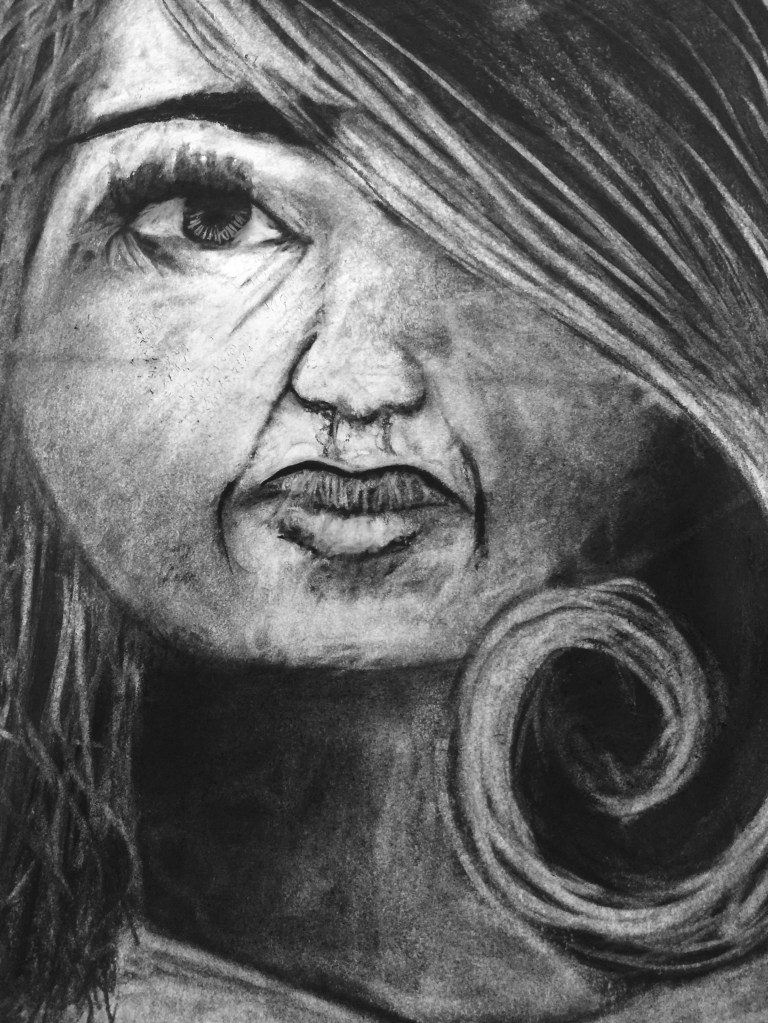
Chase’s Self Portrait ‘You’re Stronger Than You Think’. Courtesy: Ruth Chase.
Will you always be a Venice girl?
YES, anyone who grew up in Venice feels this way. When people ask me where I’m from I say, I live in Nevada City, but I’m from Venice. Venice is my emotional birth home; no other place can replace that. There is a quality inside me that makes me feel different from other people when I am away from Venice, when I’m with Venice sisters and brothers, I feel something that is the same.
The West of Lincoln Project exhibition is at the new Venice Arts gallery space, east of Lincoln, at 13445 Beach Avenue. Join the opening reception on Saturday, August 5th from 4:00 pm – 8:00 pm. The exhibition runs until September 1st.
Chase in her studio with her dog. Courtesy: Ruth Chase.
August 5 – September 1, 2017 | Solo Show Ruth Chase
“Second Chance” 36 × 36″
“Fear Is A Liar”
“Stronger Than You Realize” 48 x 48″
“Never Forget Where You Came From, Always Remember Where You’re Going” 48 × 48″
“My Life Depends On It”
“Spirit Of The Moment”
“Place Of Strength” 36 x 36″
“Summer Breeze, Community Love”
“I Surrender”
Opening Reception: Saturday, August 5th, 2017 @ 5 – 8p Closing Reception & Artist Talk: Sunday, September 10, 2017 @ 10am Venice Arts, 13445 Beach Ave., Venice, CA
Paintings by Ruth Chase Biographies by Gena Lasko
Documents life growing up in Venice, CA and the powerful insights that come from street smarts in a multi media installation of paintings, audio video, social media engagement, the Venice Tribute Wall and written biographies. Awarded a grant for an Individual Artist through the Carl Jacobs Foundation.
The project was more than two years in the making and involved over 300 participants, each of whom was chosen to convey different perspectives and a broad spectrum of experiences. Like Chase, these subjects grew up and attended school in Venice. Chase worked in ongoing collaboration with each individual to create painted portraits.
Featuring Life Stories Of: Elaine Leslie, Solo Scott, Gloria Omar, Meta Zimmerman, Brad James, Fernando Manzanilla, David Fowler, Rhonda Lynn Wise, Eddie Hadvina, Leonard Duran, and Ruth Chase.
Submitted for the Venice Tribute Wall by Ray Ramos
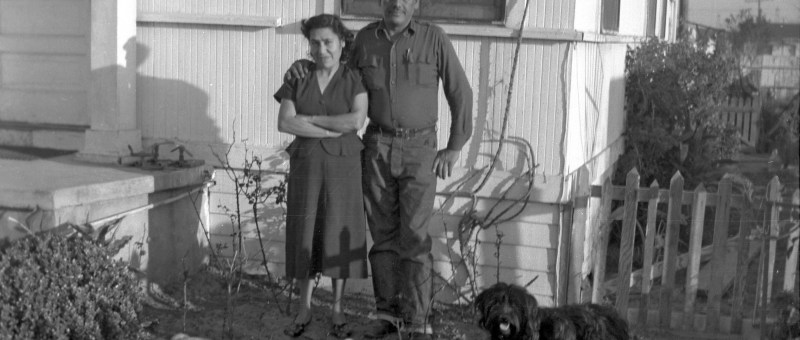
When I think of Venice; I think of my Grandma Jessie and my Grandpa Eddie. The Martinez’s arrived in Venice in 1937, from San Pedro. First residing on Trolley Way (now Pacific Ave.), then on Linnie Canal (the house long gone) until moving finally to Penmar Ave. in the mid sixties. They were hard working, simple folk. My Grandma Jessie was a soft spoken Christian woman (The Church of the Nazarene.) She always seemed to be cooking (homemade tortillas every morning) or sewing something wonderful… (how many people in Venice own a sewing machine these days?) My Grandpa Eddie was a big, rough and tumble guy, with hands the size of baseball gloves. He and his brothers had their own refuse service, that took care of the Venice area. This was way before Los Angeles had a city sanitation department. My Grandpa Eddie was probably. the most influential man in my life. He was one of those guys, who could do, or fix anything. He enjoyed photography, and even had his own darkroom in the garage (No doubt, he developed the negative for the this accompanying photo.) He would take the time brew and bottle his own beer (even root beer for me and my brothers… even though it was pretty damn strong stuff. Some of my most cherished memories, are just spending time with him, watching television together; anything to The Adventures of Ozzie and Harriet and The Rifleman to Let’s Make a Deal and The Match Game. He really enjoyed television, he would watch it, with his long left leg slung over the arm of his wooden ranch style chair (which I still have.) My grand parents passed in the early 90’s. They weren’t in Venice from the beginning; but they were part of the Venice community for a long, long. long time. To me, that’s when Venice was cool. I still miss them… they were my favorite part of growing up in Venice.
Ray Ramos ~ Venice, CA
W e s t of L i n c o l n Project
August 5 – September 1
Opening Reception | Saturday, August 5, 4 – 8pm
13445 Beach Ave., Venice Marina, CA
Brad James was the first to be painted for The West of Lincoln Project, following my ownself-portrait. He offered to tell his story and have me paint it before anyone else had agreed to participate. Brad and I met as little kids, crossing paths at the local church and the church summer camps. I remember Brad was there when I was learning how to smoke pot behind the church in a refrigerator box someplace out of sight of the adults. Over the years, I wouldn’t see much of Brad until we worked together on this project in 2015.
Brad James & Ruth Chase 2015, Venice, CA
Brad James
1967 | Beach Ave.
I relate to the wolf because of its strength, speed, and because my brothers and I were raised like a wolf pack in Dogtown.
The most challenging thing about growing up in Venice was deciphering the truth from everybody else’s BS. At home, on the streets; it seemed like just about everybody was either lying or they were making up stuff in their heads. I would question my own reality. “Can I trust my brothers? Can I trust anyone?” I should be able to trust family, but it didn’t always seem that way. My brothers were in the Venice Hoodlums. Having those guys to look up to was insane. I thought that was the road I would go down, not realizing I had a choice. I just thought that was the way it was: You’re going to get a tattoo; you’re gonna get your name; you’re gonna be bigger than life; people are going to fear you, and kick every ass that steps in front of you and keep moving. When I heard someone say “Brad, you don’t have to get jumped in, you were born in!” I realized I didn’t ask to be in this, I was born into this. Venice was my world, but eventually, I came to realize that all I wanted to do was to be a better person. Now I help people around me, like my friends by being of service, when someone is tripping, to help walk them out of it. Recovery is a circle. You go through it, you learn from it, then you come out of it. That pretty much sums up a lot of my life: Sometimes good men do bad things, which don’t make them bad. We were all influenced by our surroundings.
Today, I live not too far from Venice. I work maintenance and operations for a Southern California School District. I will always call Venice my home.
“Fear Is A Liar” Inspired by Brad James, Painted by Ruth Chase – Neft Collection
Painted in collaboration with Brad James by Ruth Chase. This is the second of 12 portraits in the West of Lincoln Project. The painting reflects the wisdom Brad has as a result of growing up in Venice, CA. The content of the picture came from an interview taken by Ruth, along with daily phone calls and texts to Brad about how best paint his story. Brad’s biography was written by Gena Lasko.
















 Home
Home 